

-
-

-

-
 The Emperor of All Maladies $18.09
 -

-
-
-

-

-

-

-

-
 The Urban Design Reader $116.08
 -
 Phaedo $36.32
 -

-
 Phaedrus $36.07
-32%
Phaedrus
$36.07 Save:$17.00(32%)
Available in stock
| Language: | English |
|---|---|
| Publication date: | 30 July 2024 |
| Dimensions: | 13.97 x 1.12 x 21.59 cm |
| ISBN-13: | 979-8334453449 |

Additional information
| Format | Hardcover |
|---|
Description
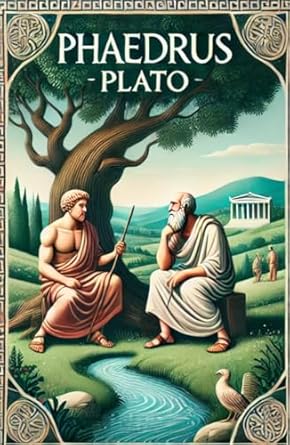
“”Phaedrus”” by Plato is a rich and complex dialogue that intertwines themes of love, rhetoric, and the soul’s relationship to the pursuit of truth and beauty. Set outside the city of Athens, the dialogue takes place between Socrates and Phaedrus, a young student enamored with the art of rhetoric. The dialogue begins with Phaedrus reading a speech by Lysias, a renowned orator, which argues that it is better to give one’s favors to someone who does not love you than to someone who does. Socrates critiques the speech for its content and style, prompting a deeper discussion on the nature of rhetoric itself. Socrates argues that true rhetoric requires knowledge of the truth of the subject, not just the ability to persuade. The conversation then shifts to the topic of love, which Socrates claims has been poorly addressed in Lysias’s speech. Socrates presents his own ideas through two speeches. In the first speech, he adopts a similar position to Lysias, suggesting that non-love is better as it is more rational and less harmful. However, he soon retracts this stance, criticizing it for being unethical and misrepresentative of the nature of the soul. In his second and more famous speech, Socrates describes love as a form of divine madness that can lead the soul closer to the divine. He employs the metaphor of a charioteer with two winged horses (one noble and one ignoble) to explain how the soul is torn between rational impulses and base desires. True love, or the heavenly love, helps the soul recollect the knowledge of the Forms (beauty, truth, justice, and goodness) seen in a previous existence. This type of love elevates both the lover and the beloved, guiding them towards higher intellectual and spiritual pursuits. Finally, the dialogue concludes with a reflection on the principles of writing and speaking effectively. Socrates emphasizes that a skilled rhetorician must understand the souls of the audience and tailor the arguments accordingly. He also touches on the inherent weaknesses of writing, such as its inability to respond to questions or adapt to the needs of each reader, presenting a complex view of communication, memory, and philosophical education. Overall, “”Phaedrus”” is a multifaceted work that not only debates various forms of love and madness but also deeply examines the ethics and effectiveness of communication, making it a profound exploration of philosophical ideals. —- ISBN: 9798334453449
Reviews (0)
Only logged in customers who have purchased this product may leave a review.




Reviews
There are no reviews yet.