
-
-

-

-
 The Emperor of All Maladies $18.09
 -

-
-

-
-

-
-
-

-
 The Urban Design Reader $116.08
 -
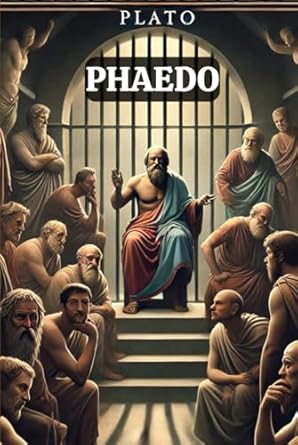
 Phaedo $36.32
-32%
Phaedo
$36.32 Save:$17.00(32%)
Available in stock
| Language: | English |
|---|---|
| Publication date: | 30 July 2024 |
| Dimensions: | 15.24 x 1.14 x 22.86 cm |
| ISBN-13: | 979-8334454552 |


Additional information
| Format | Hardcover |
|---|
Description
“”Phaedo”” by Plato is one of the most famous and poignant of the Platonic dialogues. The dialogue is set on the last day of Socrates’ life, during the final hours before his execution. It recounts Socrates’ discussions on the nature of the soul, its immortality, and the philosopher’s attitude toward death. The dialogue is named after Phaedo, a young follower of Socrates, who is one of the interlocutors and who later recounts the event to Echecrates, a fellow philosopher. The narrative begins with Phaedo recounting the scene to Echecrates, describing Socrates’ final conversations with his close friends, including Cebes and Simmias. The central topic of their discussion is whether the soul survives death. Socrates uses various arguments to illustrate his conviction that the soul is immortal. One of the key arguments Socrates presents is the Theory of Recollection, which suggests that learning is a form of remembering. This idea stems from the belief that the soul exists before birth and possesses knowledge from that prior existence. Therefore, when we learn something new, we are merely recalling information we already inherently know. Another significant argument is the Theory of Affinity, where Socrates compares the soul to divine, immortal, and rational things. He argues that just as the intelligible is more durable than the visible, the soul (being of a similar nature to the eternal and unchangeable forms) is more durable than the body. Socrates also discusses the philosopher’s practice of dying, which involves separating the soul from the body’s desires and needs as much as possible. He asserts that true philosophers make it their life’s goal to liberate the soul in this man, viewing death as the ultimate release from the physical body. As the time for his execution draws near, Socrates discusses the afterlife, where he believes the soul will reach true knowledge without the impediment of the body. He remains calm and composed, drinking the hemlock with equanimity. His last words to Crito concern a debt owed to Asclepius, suggesting that his death is a cure or a release from the ailments of life. “”Phaedo”” ends with Phaedo affirming the bravery and serenity with which Socrates faced his death, leaving a profound impact on all who witnessed it. This dialogue is not just a discourse on the soul but also serves as a moving account of Socrates’ final moments, embodying his philosophical teachings through the manner of his death. It challenges readers to think about the meaning of life and death, the nature of the soul, and the pursuit of truth through philosophical reasoning. —- ISBN: 9798334454552
Reviews (0)
Only logged in customers who have purchased this product may leave a review.



Reviews
There are no reviews yet.