

-
 A Theory of Narrative Drawing $177.89
 -
 The Urban Design Reader $116.08
 -
 The Cheese Experiment $17.33
 -

-
 24 Hours in Space $11.27
 -
 A Rulebook for Arguments $10.35
 -

-

-
 The Emperor of All Maladies $18.09
 -

-

-

-
 5MINUTE SPIDERMAN STORIES $40.37
 -

-

-

-
![A Bear Called Paddington [Anniversary Edition]: 65th Anniversary gift edition of the original funny classic novel for children, with colour illustrations throughout](https://bookdp.com.au/wp-content/uploads/2024/07/51S7B4U4h4L._SY445_SX342_-100x100.jpg)
-
 Runaway Horses $20.15
 -
-

-27%
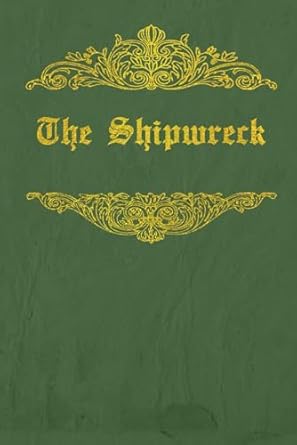
The Shipwreck: With original illustrations – annotated
$12.64 Save:$5.00(27%)
Available in stock
| Print length: | 145 pages |
|---|---|
| Language: | English |
| Publication date: | 6 June 2024 |
| Dimensions: | 15.24 x 0.84 x 22.86 cm |
| ISBN-13: | 979-8327760585 |
People Also Viewed
-
 HR Approved 52 Ways To Inform Coworkers They're Stupid
$13.13
HR Approved 52 Ways To Inform Coworkers They're Stupid
$13.13
-
Food & Drink: Coloring Book with Easy and Bold Designs for Adults, Beginners, and Kids, Simple Illustrations of Food, Snacks, Desserts, Fruits, and Many More to Relax and Boost Creativity
$12.64
-
 Memento Mori and Depictions of Death: An Image Archive for Artists and Designers
$24.30
Memento Mori and Depictions of Death: An Image Archive for Artists and Designers
$24.30
Additional information
| Format | Paperback |
|---|
Description
The Shipwreck”” by William Falconer is a notable poem that recounts the harrowing tale of a ship and its crew facing a disastrous storm. William Falconer, a Scottish poet and sailor, published this work in 1762. Falconer’s personal experience as a mariner profoundly influenced his writing, giving the poem a remarkable degree of authenticity and vividness in its depiction of life at sea and the calamities faced by sailors. Overview of “”The Shipwreck”” Plot Summary: The poem is divided into three cantos, detailing the journey of a ship from the eastern Mediterranean back to England. As the story progresses, the crew encounters increasingly severe weather, culminating in a catastrophic storm that ultimately leads to the shipwreck. The poem not only narrates the physical struggle of the sailors but also delves into their emotional and psychological battles as they face impending doom. Themes: Nature’s Power: The poem vividly portrays the might and unpredictability of the sea, emphasizing how human beings are at the mercy of natural forces. Fate and Providence: Falconer explores themes of fate, destiny, and divine intervention, reflecting on the sailors’ reliance on faith and luck in their perilous journey. Courage and Brotherhood: The camaraderie among the sailors, their bravery in the face of danger, and their collective efforts to survive are central themes in the poem. Stylistic Elements: Descriptive Language: Falconer’s use of detailed and technical maritime language adds realism and immerses the reader in the sailors’ experience. Epic Structure: The poem’s structure and elevated language give it an epic quality, reminiscent of classical literary traditions. Imagery and Symbolism: Vivid imagery and rich symbolism are employed to evoke the terror and beauty of the sea, as well as the sailors’ emotional states. Significance “”The Shipwreck”” is significant not only for its literary qualities but also for its contribution to maritime literature. It provides a rare poetic insight into the life of 18th-century sailors and their struggles with the sea. Falconer’s own experiences lend authenticity to the narrative, making it a valuable historical document as well as a work of art. William Falconer: The Poet William Falconer (1732-1769) was a sailor himself, which profoundly influenced his writing. He is best known for “”The Shipwreck,”” but he also made contributions to the improvement of naval navigation and terminology. His firsthand knowledge of the sea and its perils is evident in his detailed and accurate depictions in the poem. Excerpts from “”The Shipwreck”” Here are a few notable lines from Falconer’s poem: From Canto I: “”Now, night comes on, and a loud trembling wind Rolls from the west, and showers the sea with foam;”” From Canto II: “”The tempest gathers; be all hands employ’d! The cables part; the falling prow’s destroy’d!”” From Canto III: “”Ah, then, what horrid thoughts the soul appal! What screams of terror rend the affrighted hall!”” Conclusion “”The Shipwreck”” by William Falconer remains a powerful and evocative poem, capturing the perilous beauty of the sea and the indomitable spirit of sailors. Its combination of technical detail, dramatic narrative, and emotional depth continues to resonate with readers, offering a timeless reflection on human endurance and the capricious nature of the ocean. 4o —- ISBN: 9798327760585
Reviews (0)
Only logged in customers who have purchased this product may leave a review.





Reviews
There are no reviews yet.