
-
-

-
 The Emperor of All Maladies $18.09
 -

-
-

-
-

-
 The Urban Design Reader $116.08
 -

-
-

-
-

-

-
-

-

-

-

-
-26%
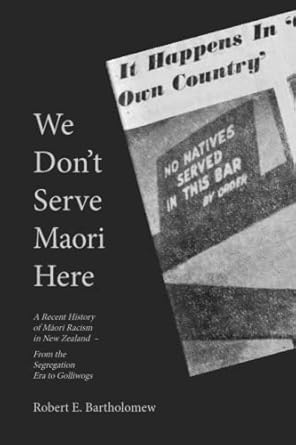
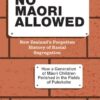
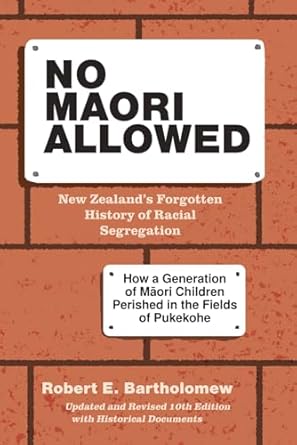
No Maori Allowed: New Zealand’s Forgotten History of Racial Segregation
$20.62 Save:$8.00(26%)
Available in stock
| Print length: | 225 pages |
|---|---|
| Language: | English |
| Publication date: | 28 June 2022 |
| Dimensions: | 15.24 x 1.45 x 22.86 cm |
| ISBN-10: | 0473488868 |
| ISBN-13: | 978-0473488864 |


Additional information
| Format | Paperback |
|---|
Description
From the mid-1920s to the early 1960s, the South Auckland town of Pukekohe was the de facto racist capital of New Zealand. Barbers refused to cut Māori hair, bars would not serve them alcohol, some shopkeepers would not let them inside, and they were segregated at the cinema. At one point, main street businesses refused to let them use their toilets, and the local school had separate bathrooms for Māori. Children entering the ‘white’ toilet were hit with a strap. While the other students could swim in the baths Monday through Thursday, Māori were only allowed in on Fridays – just before the dirty water was drained. Following complaints by European parents, beginning in 1952 Pukekohe housed the only segregated Māori area-school in the history of the country. Worst of all, over 200 Māori infants and children died from preventable conditions linked to the atrocious housing – 73 percent of all deaths during this period. For over 40 years, a group of poor, nomadic Māori farm workers were forced to live in filthy, disgraceful conditions in run-down shacks and manure sheds near the fields where they toiled, picking vegetables on the outskirts of Pukekohe. They were confined to an area known as The Reservation, strategically separated from European houses where no one would lend them money or allow them to rent. It is unacceptable that in the second decade of the twenty-first century, many New Zealanders do not know what happened at Pukekohe and are oblivious of the extent of racial intolerance against Māori across the country during the segregation era. Ultimately, this is a story about the exploitation of people who were dehumanised, deemed to be expendable, and treated as second-class citizens in their own land. —- ISBN: 9780473488864 | ISBN10: 0473488868 | ISBN-13: 978-0473488864