


-29%
Gesture Drawing for Animation
$62.41 Save:$25.00(29%)
Available in stock
| Print length: | 283 pages |
|---|---|
| Language: | English |
| Publication date: | 8 October 2020 |
| Dimensions: | 17.78 x 1.63 x 25.4 cm |
| ISBN-13: | 979-8694892155 |
People Also Viewed
-
 Watercolor Workbook: Flowers, Feathers, and Animal Friends: 25 Beginner-Friendly Projects on Premium Watercolor Paper
$32.56
Watercolor Workbook: Flowers, Feathers, and Animal Friends: 25 Beginner-Friendly Projects on Premium Watercolor Paper
$32.56
-
 Alfred's Basic Piano Prep Course Lesson Book, Bk B: For the Young Beginner (Alfred's Basic Piano Library)
$17.77
Alfred's Basic Piano Prep Course Lesson Book, Bk B: For the Young Beginner (Alfred's Basic Piano Library)
$17.77
-
 Phosphorescence: The inspiring bestseller and multi award-winning book from the author of Bright Shining
$17.86
Phosphorescence: The inspiring bestseller and multi award-winning book from the author of Bright Shining
$17.86
Additional information
| Format | Paperback |
|---|
Description
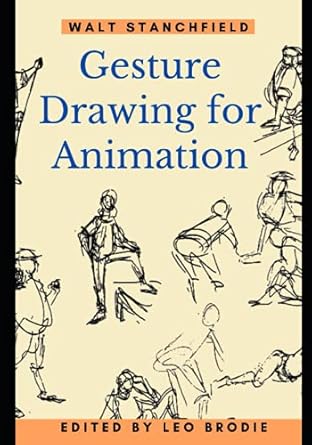
Walt Stanchfield was an animator who taught life drawing classes for animators with a special emphasis on gesture drawing. For each weekly class session, he wrote informal handouts to emphasize the theme of the current class session, to comment on work done in the previous class, or discuss whatever topic struck his fancy. Over a period of years, these notes were lovingly shared, studied, and treasured by animators and animation students everywhere. Mr. Stanchfield personally gave copies of his collection to interested students, and was happy to seem them distributed. According to many people who were lucky enough to study under him, he wanted to publish them as a book, but the studio where he worked was not interested. The goal of this project is to imagine the book that Walt Stanchfield might have written. Walt Stanchfield did not present his topics in any particular order, which suited the ongoing nature of the classes. Walt’s handouts are like individual frames of animation—some are extremes, some are in between, some are even cleanups. As I was reading the notes and trying to absorb as much as I could, I thought I might understand them better if it were all laid out in sequence, with basic topics followed by more complex ideas. I wanted to see his ideas grouped by subject so I could compare the ideas. In other words, I wanted the topics to be arranged like a normal book. So I’ve re-arranged bits and pieces from the handouts into cohesive chapters, while taking the liberty to eliminate redundancy and make minor edits just as a book editor would. In deciding how to organize the material, I imagined how Walt himself would have put it together if he’d written it. Where would he have started? Knowing that the readers of the book would not be the lucky members of his classes, what concepts would have illustrated before moving on to more advanced topics? I tried to follow the principles Walt himself outlines in these notes: clarity, attention to the “”essence,”” emotion, and using the minimum number of words (lines) to get the point across. Another reason I wanted to see this material as a book is that there is no other book that covers the same information. There are many excellent volumes on animation, but they generally assume that the reader can already draw animatable characters with strong poses without explaining how to get to that stage. All the books on generic figure and life drawing, even those that emphasize gesture, encourage capturing the model’s appearance and gesture without explaining how to internalize the gesture so as to push it to extremes or apply it to a different figure. Personally, I think this compilation—if it were a book—would take its place among the top volumes on animation. There is an informal, lively charm to the original handouts that gives the reader a sense of ‘being there.’ You may want to check them out to get a feel for how this information was originally presented. I’ve left “”Savvy Sayings”” (#47 in the animationmeat.com collection) out of this book, so it remains a delight that you can seek out on your own. Many, many thanks to Jon Hooper and Steve Kellener of AnimationMeat.com for scanning and transcribing many of Walt’s notes and making them available on their Web site. This book incorporates their scans and OCR conversions, so it would not exist without their efforts. Thanks also to Aimee Major Steinberger, who was, I believe, the first person to post one of the Walt’s notes on the Internet. — Leo BrodieSeattle, Washington —- ISBN: 9798694892155
Reviews (0)
Only logged in customers who have purchased this product may leave a review.





Reviews
There are no reviews yet.