

-

-

-

-

-
 The Emperor of All Maladies $18.09
 -
-
 Alphas Fluch (9) $53.59
 -

-
-

-23%
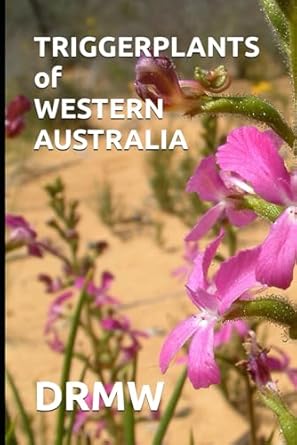
TRIGGERPLANTS of WESTERN AUSTRALIA
$38.33 Save:$11.00(23%)
Available in stock
| Print length: | 169 pages |
|---|---|
| Language: | English |
| Publication date: | 30 January 2020 |
| Dimensions: | 15.24 x 1.02 x 22.86 cm |
| ISBN-13: | 979-8863295831 |
People Also Viewed
-
 Phosphorescence: The inspiring bestseller and multi award-winning book from the author of Bright Shining
$17.86
Phosphorescence: The inspiring bestseller and multi award-winning book from the author of Bright Shining
$17.86
-
The Emperor of All Maladies
$18.09
-
 Food & Drink: Coloring Book with Easy and Bold Designs for Adults, Beginners, and Kids, Simple Illustrations of Food, Snacks, Desserts, Fruits, and Many More to Relax and Boost Creativity
$12.64
Food & Drink: Coloring Book with Easy and Bold Designs for Adults, Beginners, and Kids, Simple Illustrations of Food, Snacks, Desserts, Fruits, and Many More to Relax and Boost Creativity
$12.64
Additional information
| Format | Paperback |
|---|
Description
The Triggerplants belong to the family Stylidiaceae, one of the largest genera in Australia. The genus Stylidium is made up of about 300 species all occurring in Australia (a few other species occur in India, China and The Philippines) with about 150 species occurring in Western Australia and about 50 species around Perth. It is the 5th largest genus of plants in Australia. The name derives from the Greek stylos meaning a column. The male and female organs of the plant are fused to make up a column, the trigger, that when touched snaps forwards like a trigger to aid spread of pollen onto an insect. It can make this swing within 15 milliseconds. The trigger then rests itself. The trigger lies below the plane of the flower. Glandular hairs on the flower stem and flower can trap small insects and then produce proteolytic enzymes that break down the insect tissues, the breakdown products then being absorbed by the plant. Many Triggerplants are thus carnivorous plants. The column is reminiscent of a similar but static structure in the Orchidaceae. When the column is touched by an insect the column flies towards the insect and covers it in pollen. The contact can occur within 15 milliseconds of the column being touched. It then takes from a few minutes to half an hour to reset, again depending on species and air temperature. Movement of the column is slower in lower temperatures. The pollinating insect is a small bee. This book describes and illustrates many of the Triggerplants that can be found in Western Australia. — ISBN13: 9798863295831
Reviews (0)
Only logged in customers who have purchased this product may leave a review.





Reviews
There are no reviews yet.