

-
 Wolf of Withervale (1) $59.05
-29%
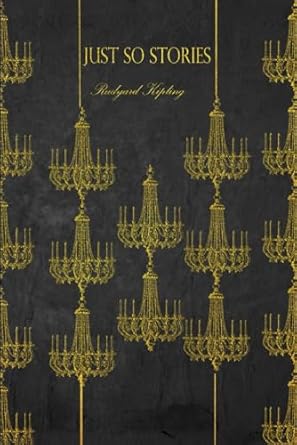
Just So Stories: With original illustrations – annotated
$14.14 Save:$6.00(29%)
Available in stock
| Print length: | 172 pages |
|---|---|
| Language: | English |
| Publication date: | 12 June 2024 |
| Dimensions: | 15.24 x 0.99 x 22.86 cm |
| ISBN-13: | 979-8328268721 |


Additional information
| Format | Paperback |
|---|
Description
Just So Stories Just So Stories for Little Children is a collection of origin stories by Rudyard Kipling, first published in 1902. These whimsical and imaginative tales explain how various animals came to have their distinctive features. The stories are characterized by their playful use of language, rhythmic prose, and moral lessons, making them enduring favorites for children and adults alike. Overview Title: Just So Stories for Little Children Author: Rudyard Kipling Publication Date: 1902 Genre: Children’s literature, origin stories Background The “”Just So Stories”” were initially written for Kipling’s own children, and the book is dedicated to “”Effie,”” the author’s daughter, Josephine, who died at a young age. The title “”Just So Stories”” refers to the way the stories had to be told exactly as written when Kipling narrated them to his daughter. Structure and Style The stories are written in a unique style that combines formal, poetic language with playful, colloquial speech. Kipling often employs repetition, alliteration, and rhythm to create a lyrical and engaging narrative. Each story concludes with a moral or whimsical explanation for an animal’s traits. Major Stories and Summaries “”How the Whale Got His Throat”” Summary: The tale explains how a greedy whale, who swallowed everything in the ocean, was tricked by a clever mariner into getting a small throat, preventing it from swallowing large prey again. Moral: Cleverness can overcome brute strength. “”How the Camel Got His Hump”” Summary: The story tells how the lazy camel, who refused to work, was given a hump by a magical Djinn so he could store food and water and work without stopping. Moral: Laziness leads to extra burdens. “”How the Rhinoceros Got His Skin”” Summary: A parsee, angered by the rhinoceros for stealing his cake, adds crumbs and stale cake to the rhinoceros’s skin while it’s off, leading to the animal’s wrinkled and itchy skin. Moral: Mischief and greed have lasting consequences. “”How the Leopard Got His Spots”” Summary: This story explains how the Ethiopian man and his friend, the Leopard, changed their colors to adapt to the jungle. The Ethiopian changed to a dark hue, and the Leopard got spots to blend in with the speckled shadows. Moral: Adaptability is essential for survival. “”The Elephant’s Child”” Summary: This tale follows a curious elephant child who, in his quest to learn what crocodiles eat, gets his nose stretched into a trunk. This new trunk proves to be very useful. Moral: Curiosity leads to knowledge and adaptation. “”The Sing-Song of Old Man Kangaroo”” Summary: A story about how the kangaroo got its strong legs and tail by being chased all over Australia by a determined dingo, resulting in the kangaroo’s distinctive features. Moral: Persistence shapes us into what we are. “”The Beginning of the Armadillos”” Summary: This tale explains how a hedgehog and a tortoise outwit a hungry jaguar by transforming into the first armadillos, using their combined skills of rolling up and having a hard shell. Moral: Cooperation and ingenuity can create new strengths. —- ISBN: 9798328268721
Reviews (0)
Only logged in customers who have purchased this product may leave a review.




Reviews
There are no reviews yet.