

-

-

-

-

-
 The Emperor of All Maladies $18.09
-28%
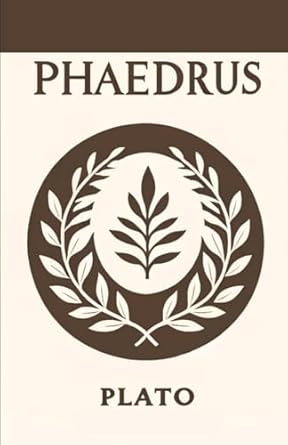
Phaedrus
$11.21 Save:$4.00(28%)
Available in stock
| Print length: | 111 pages |
|---|---|
| Language: | English |
| Publication date: | 3 June 2024 |
| Dimensions: | 13.97 x 0.64 x 21.59 cm |
| ISBN-13: | 979-8325910463 |


Additional information
| Format | Paperback |
|---|
Description
“”Phaedrus,”” written by Plato, is a dialogue between Plato’s protagonist, Socrates, and Phaedrus, an aristocratic young man. The dialogue is rich in themes that explore love, rhetoric, and the nature of the soul, blending philosophical arguments with mythological narratives. It is set outside the city of Athens in a scenic, pastoral landscape, which provides a serene backdrop for an intense philosophical discussion. The dialogue begins with Phaedrus enticing Socrates to walk outside the city walls, where Phaedrus reads to Socrates a speech by Lysias, a renowned orator. The speech concerns the topic of love, or more precisely, a case made by Lysias arguing against the pursuit of a relationship based on romantic love, suggesting instead a relationship formed from a more pragmatic and less passionate partnership. This prompts Socrates to critique Lysias’s arguments by delivering two speeches on love. In his first speech, Socrates ironically agrees with Lysias, presenting love as a form of madness that leads to harmful obsessions. However, he quickly retracts this view and embarks on a second speech, which posits that there are two types of madness, one of which is a divine madness. Divine madness, including that inspired by the Muses, prophets, or in this case, Eros (the god of love), can lead to an elevation of the soul. Socrates argues that a lover under the influence of this divine madness can help elevate the beloved’s soul, guiding them towards truth and the pursuit of virtue. The dialogue then shifts to a discussion on the nature of rhetoric and writing. Socrates criticizes conventional rhetoric taught by sophists of the time, which he sees as merely a form of flattery devoid of truth. He posits that true rhetoric requires knowledge of the truth about the subject and the understanding of the soul’s nature to persuade effectively. This part of the dialogue also examines the implications of writing as a medium, discussing its limitations in conveying true knowledge—it can only remind those who already know but cannot teach the ignorant. In the conclusion, Socrates revisits the theme of the soul, utilizing the myth of the charioteer to elaborate on the soul’s tripartite nature, which includes the elements of reason, spirit, and desire. This myth serves to illustrate the inner conflict within the soul and the struggle for balance and harmony. Overall, “”Phaedrus”” is a profound exploration of the philosophical concepts of love, rhetoric, and the soul, challenging readers to reconsider the values of passionate love, the purpose of speech-making, and the process of attaining true knowledge. —- ISBN: 9798325910463
Reviews (0)
Only logged in customers who have purchased this product may leave a review.




Reviews
There are no reviews yet.